Lisbon: Sintra Cascais & Pena Palace Small Group Tour
3.240 reviews
Buy now
From 49,00€ per person
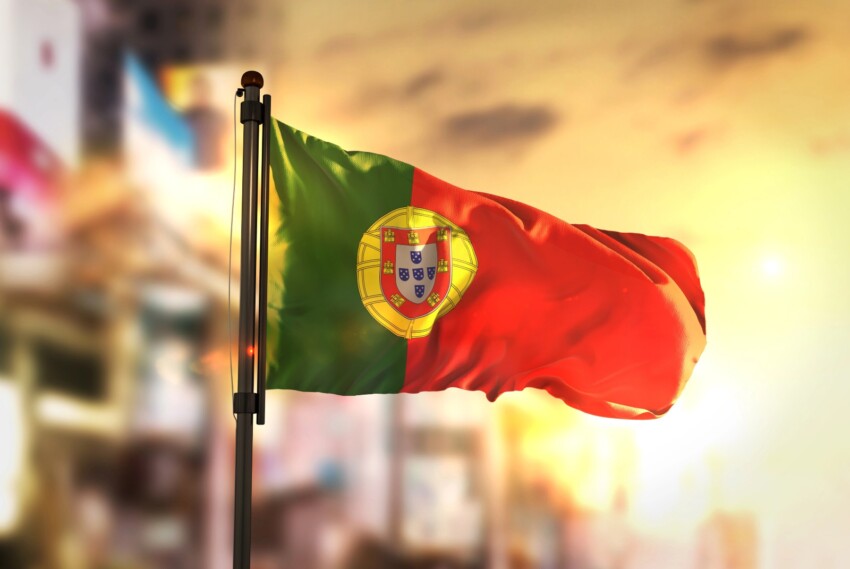
Among Europe’s most symbolism-laden flags, Portugal’s flag encompasses more than nine centuries of history, conquest and national identity within a green and red rectangle. At its centre sits an emblem that no other country in the world could claim: an armillary sphere — the instrument used by Portuguese navigators to chart the globe between the fifteenth and sixteenth centuries — topped by a medieval shield featuring five inner shields and seven golden castles. It is no mere decorative emblem, but a distillation of battles, explorations and revolutions that have shaped Europe and the world.
The green-and-red flag, as it is known in Portuguese, was officially adopted on 30 June 1911 following the republican revolution of 5 October 1910, which ended the monarchy. From that moment, green and red replaced the white and royal blue, marking a decisive break with the dynastic past. In this article, you will discover the meaning of each element of the Portuguese flag, its evolution through the centuries, theories about the colours and the fascinating details that make it one of Europe’s most captivating national symbols.
The national flag of Portugal has a rectangular form with proportions of 2:3 — for every two units of height, three of width. It is divided vertically into two bands of unequal size: the green band, positioned on the hoist side, occupies 2/5 of the total length, whilst the red band covers the remaining 3/5, forming the largest portion of the flag.
At the centre of the dividing line between the two colours sits the national coat of arms, positioned so as to overlap equally across both bands. The coat of arms is composed of a golden armillary sphere upon which rests the traditional Portuguese shield. The exact proportions of the colours and the positioning of the coat of arms are defined by Portuguese law, which protects the national symbol from misuse: publicly insulting or destroying the flag carries a penalty of up to two years’ imprisonment under Portuguese criminal law.
The Constitution of the Portuguese Republic explicitly states in Article 11, paragraph 1, that the national flag is “a symbol of the sovereignty of the Republic, of independence, unity and the integrity of Portugal”.
The significance of green and red on Portugal’s flag has been subject to differing interpretations over time, some official, others politically charged. There is no single universally accepted version, and this ambiguity is part of the symbol’s allure.
The most widely accepted official interpretation holds that green represents the hope of the Portuguese people in the future and their confidence in self-governance achieved through the Republic. In this sense, green was also chosen because it was the colour of the Portuguese Republican Party, the political movement that led the 1910 revolution.
During the Estado Novo, the authoritarian regime that governed Portugal from 1933 to 1974, green was reinterpreted as a symbol of the country’s woodlands and forests, in a more naturalistic and nationalist reading. A third theory, less romantic but historically intriguing, links green to the colours of the Cross of the Order of Christ — red on a green field — used during the Revolution of 1640, when Portugal freed itself from Spanish rule.
Red is universally interpreted as a symbol of blood shed by those who fell in wars of independence and battles to defend the homeland. It was the colour of the revolutionary flag of 1910, chosen to distinguish the new republican state from the previous monarchical flag, which used a light red background. Adding green alongside red was precisely to avoid confusion with the old royal emblem.
There is also a poetic interpretation linking red to the colour of dawn and dusk as seen from Portuguese ships during the great explorations of the sixteenth century — a powerful image celebrating the legacy of the navigators. Some argue the two colours evoke Iberian federalism, a republican-socialist ideology of the early twentieth century that envisioned a future political union between Portugal and Spain, though this reading has always been rejected by official Portuguese culture, which has fiercely defended its own independence.
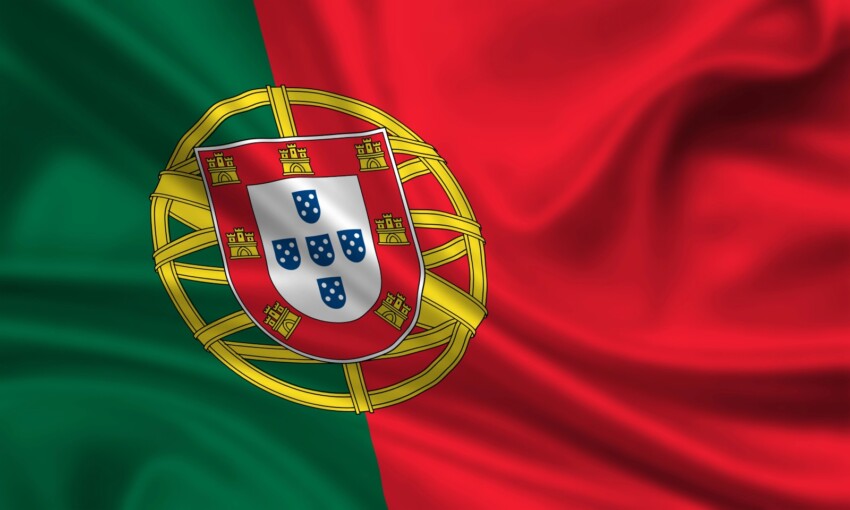
The most complex and fascinating part of the Portuguese flag is certainly the coat of arms, officially known as the Brasão de Armas de Portugal. Adopted in its current form on 30 June 1911 alongside the flag, this emblem is considered one of the oldest still in use in Europe, with roots reaching back to the twelfth century. Each element tells a different chapter of the country’s history.
The armillary sphere is the most immediately recognisable element of the Portuguese coat of arms. It is an astronomical instrument — also known as a spherical astrolabe — used by navigators to calculate the position of the stars and plot navigation routes. It was the instrument with which Vasco da Gama opened the sea route to the Indies in 1498, with which Bartolomeu Dias rounded the Cape of Good Hope in 1488, with which the Portuguese built the first great transoceanic commercial empire. In Lisbon, in the Belém quarter, the Jerónimos Monastery and the Belém Tower still commemorate that season of exploration which the armillary sphere symbolises on the flag.
The armillary sphere was already the personal symbol of Manuel I, the king under whom geographical discoveries reached their peak, and was associated with various coats of arms of colonial Portugal. It became part of the official national coat of arms in 1816, with the elevation of Brazil to kingdom status and the creation of the United Kingdom of Portugal, Brazil and the Algarves. In the version appearing on the flag, the sphere is depicted in gold with black elements: a main arc corresponding to the sun’s annual path and four smaller arcs indicating the equator and the two tropics of Cancer and Capricorn.
Superimposed over the armillary sphere is the traditional Portuguese shield, present in virtually all of the country’s national flags since 1143. The shield is divided into two parts: an inner white field with five smaller blue shields arranged in quincunx pattern (forming a cross), and an outer red border with seven golden three-towered castles.
It is one of the most enduring heraldic elements in European history: from the Battle of Ourique (1139) to today, the shield with its five inner shields has never disappeared from Portuguese national insignia, changing in form and detail whilst maintaining its symbolic essence intact.
At the heart of the coat of arms are five blue shields, each containing in turn five silver bezants arranged in a cross, for a total of twenty-five. These shields are so central to Portuguese identity that they give the popular name to the flag: Bandeira das Quinas, meaning “Flag of the Five Shields”.
Legend has it that the five shields commemorate the victory of Afonso Henriques — Portugal’s first king — at the Battle of Ourique in 1139 against five Moorish kings. Before the clash, according to tradition, the king had a vision of Jesus Christ on the cross forewarning him of victory. In gratitude, he had the five defeated kings depicted on the shield. The twenty-five silver bezants within each shield have been interpreted in various ways over the centuries: the five wounds of Christ (hands, feet and side), the coins for which Judas betrayed Jesus, or more simply the metal ornaments (bosses) that adorned medieval knights’ shields.
The current number of bezants — five per shield — was definitively codified in 1485 by John II, who also standardised the arrangement of the inner shields.
The red border of the Portuguese shield is adorned with seven three-towered castles in gold. These castles commemorate the victories of Portuguese kings during the Reconquista, the progressive Christian reconquest of the Iberian peninsula from Islamic rule. In particular, they refer to the campaigns of Afonso III, who in 1249 completed the liberation of the Algarve, the last Portuguese region under Arab control.
The number of castles has not always been seven. Originally they were in indeterminate number; they became twelve under Afonso IV and finally seven under Sebastian I in the sixteenth century. There is also a tradition connecting them to the marriage of Afonso III with Beatrice, daughter of Castilian king Afonso IX, whose gonfalon was a red cloth with a golden castle — a diplomatic reference stitched directly into the national coat of arms.
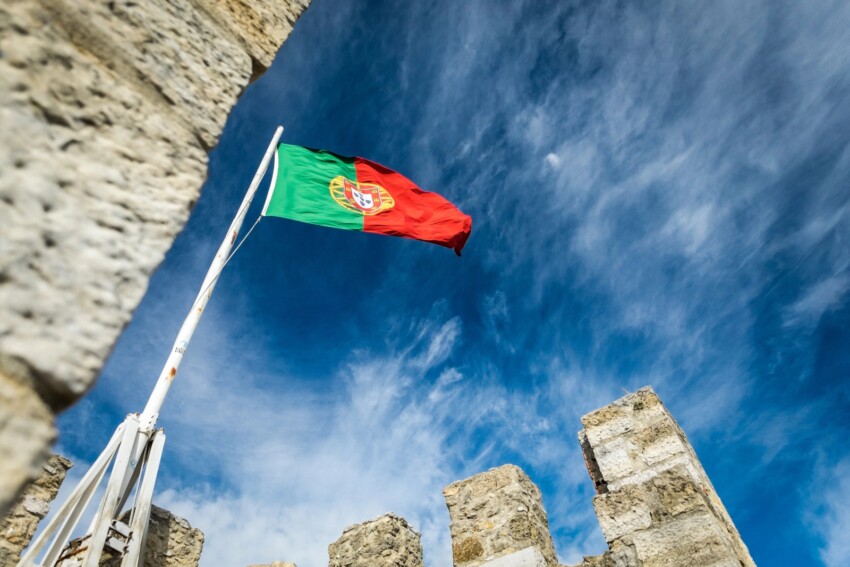
The history of Portugal’s flag is inseparable from the history of the nation itself. Each change of banner has corresponded to a profound transformation of the country, from its origins as a medieval county to the birth of the modern Republic.
The first recognisable Portuguese emblems date back to the late 11th century, when the territory was a county granted to the Burgundian Henry of Burgundy. His coat of arms featured a simple blue cross on a white background, derived from French feudal heraldry. The dominant colours of that period were therefore azure and white, which remained associated with the Portuguese monarchy for several centuries.
With Afonso Henriques, who in 1143 secured recognition of Portugal’s independence from the Kingdom of León, the shield was enriched with five inner shields. His son Sancho I (1185) transformed the symbolism, isolating the shields from the original cross and arranging them independently — a heraldic evolution that would lead to the current configuration. The Alcobaça Monastery, founded by Afonso I himself in gratitude for victory over the Moors at Santarém, is today open to visitors in Central Portugal and has been a UNESCO World Heritage Site since 1989.
In 1248 Afonso III introduced the red border with golden castles, likely in reference to the heraldry of the House of Castile of his consort. From that moment, the Portuguese coat of arms took on the essential structure it retains to this day: five blue shields in the centre, red border with castles on the outside.
In 1385 the ascension of John I, founder of the House of Aviz, to the throne brought minor modifications: four green fleurs-de-lis were added to the sides of the shield, symbolising the Order of Aviz of which the new sovereign was Master. These fleurs-de-lis later disappeared, but they testify to how thoroughly Portuguese heraldry was shaped by medieval military and religious institutions.
During the reign of Manuel I (1495–1521), the golden age of Portuguese exploration, the armillary sphere became a symbol of paramount national importance. It was present on ships, manuscripts and azulejo tiles. Vasco da Gama opened the sea route to India, Pedro Álvares Cabral “discovered” Brazil in 1500, and Fernão de Magalhães (Ferdinand Magellan) circumnavigated the globe for the first time between 1519 and 1522 on a Spanish commission but with Portuguese origins. The armillary sphere became the most immediate way to communicate the identity of a nation that had redrawn the world map. Today you can relive that legacy by following a Portugal tour that takes in the great monuments of the Manueline era.
During the 19th century, the Portuguese flag returned to the traditional colours of the monarchy: blue and white, in use from 1830. These colours reflected dynastic continuity, but completely ignored the republican ferment that was spreading throughout the country. The tension between conservative monarchists and progressive republicans accumulated for decades, until it exploded in 1910.
On the night of 4–5 October 1910, a republican military uprising ended Portuguese monarchy. The ship Adamastor, from which the revolt signal was launched, hoisted a flag with inverted colours — red towards the hoist, green towards the fly — anticipating the new national symbol.
A commission was tasked with designing the new flag. It included painter Columbano Bordalo Pinheiro, journalist João Chagas, writer Abel Botelho and two military veterans of the revolution, Ladislau Pereira and Afonso Palla. The most controversial decision was over the colours: replacing the monarchical white and azure with the green and red of the republican movement also meant abandoning centuries of visual tradition. Green, positioned towards the hoist, occupied one third of the flag; red, the dominant colour of the revolution, the remaining two thirds. The flag was approved by the Constituent Assembly on 19 June 1911 and incorporated into the Constitution on 30 June 1911.
During the authoritarian regime of the Estado Novo led by António de Oliveira Salazar, the flag remained unchanged. The regime appropriated national symbolism without modifying the banner, limiting itself to reinterpreting the colours through a nationalist and paternalistic lens. With the Carnation Revolution of 25 April 1974, which ended the dictatorship and opened the way to democracy, the flag was maintained as a symbol of the nation. The democratic Constitution of 1976 confirmed its institutional value, reaffirming the link with the 1910 revolution and republican identity.
The Portuguese flag is known by two official nicknames. The first is Bandeira das Quinas — “Flag of the Five Shields” — a direct reference to the five blue shields in the centre of the coat of arms. The second is Bandeira Verde-Rubra — “Green and Red Flag” — which simply describes the two dominant colours. Both names are used in everyday language and in official texts, testament to how deeply rooted every element of the banner is in national culture.
The influence of Portuguese heraldry can still be seen today in the flags of several former colonial countries. Brazil, although it adopted its own colours and symbols after independence in 1822, retains some traces of Lusitanian heritage in the structure of its coat of arms. The flags of Cape Verde, São Tomé and Príncipe, Angola, Mozambique and Guinea-Bissau also bear the marks of Portuguese colonial influence, though they developed fully original visual identities following independence in the 1970s.


 Hotel
Hotel  Budget accommodations
  Apartments
  Family Hotel
  Luxury Hotel